Google unveils TPU 8tx and 8i Max for confidential inference and long contexts, and open-sources TPU Sync
What is it?
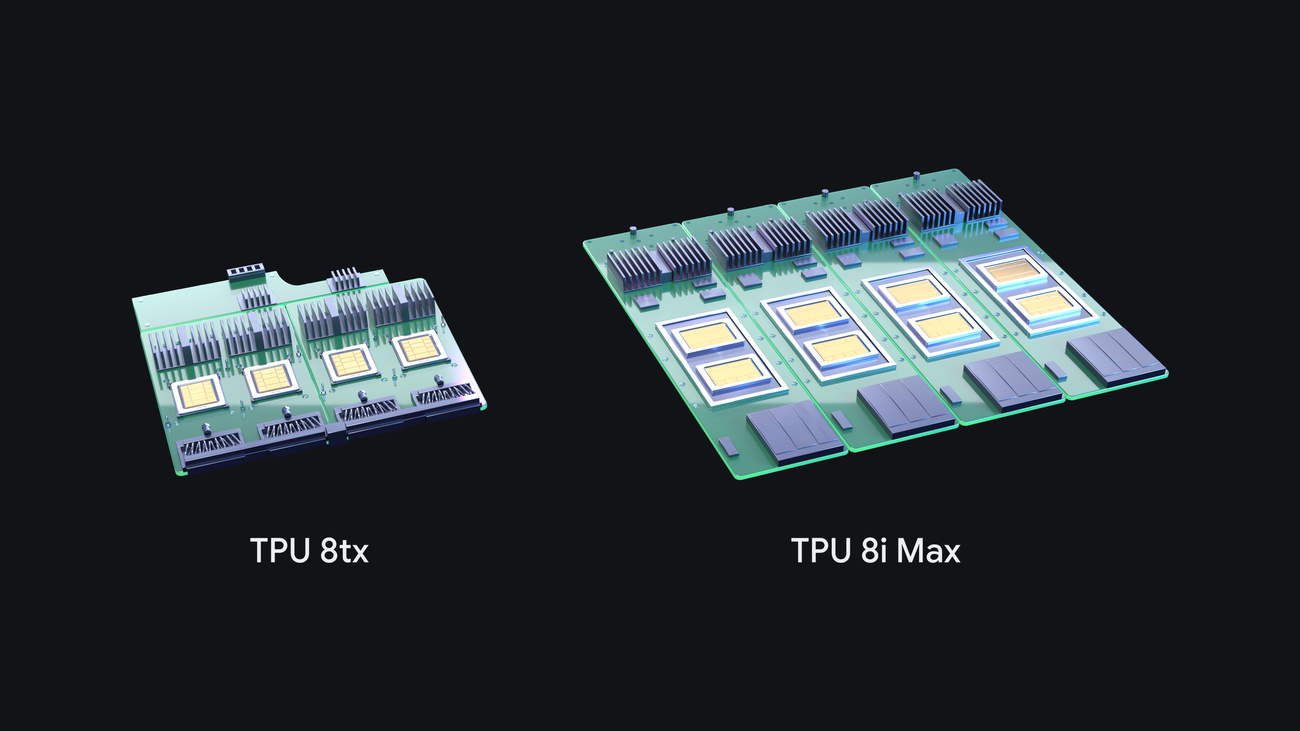
Google added two systems to its eighth-generation TPU lineup. TPU 8tx is for confidential computing: it keeps data and model weights encrypted in hardware even while they're being processed. TPU 8i Max packs two TPU 8i chips into one package, doubling compute, SRAM and HBM bandwidth for long-context work. Google also open-sourced TPU Sync, which tiers KV caches across HBM, host memory and storage, and put a TPU agent suite into preview that plugs into coding tools like Claude Code and Cursor to help move workloads onto TPUs and tune kernels. PyTorch code runs on TPUs directly through TorchTPU.
pip install torch_tpuWhy does it matter?
When agents keep long contexts open across many steps, memory runs out before compute does. Google says TPU 8tx cuts latency by up to 2x versus TPU 8tVendor claim and that TPU Sync reduces KV transfer latency and time to first token by more than 90%Vendor claim. For teams in regulated industries that need to fine-tune or run agents on sensitive data, it adds a confidential-inference option in the cloud.
Maturity
PreviewThe two new TPUs are announced only, with no launch date in the post. The TPU agent suite is in preview, while Cloud Pathways and GKE dynamic slicing are generally available.
How to track it
- Launch: check Google Cloud's TPU pricing and regions pages for when and where TPU 8tx and 8i Max open up.
- Open source: follow releases in the google/tpu-sync GitHub repo and its vLLM and SGLang integrations.
- Independent numbers: see whether InferenceX or AgentX publish separate results for TPU 8i Max.